
The first minute of a presentation is when nerves hit hardest. Use this four-part opening, 25 ready-to-use lines and practical meeting phrases to sound calm and clear.
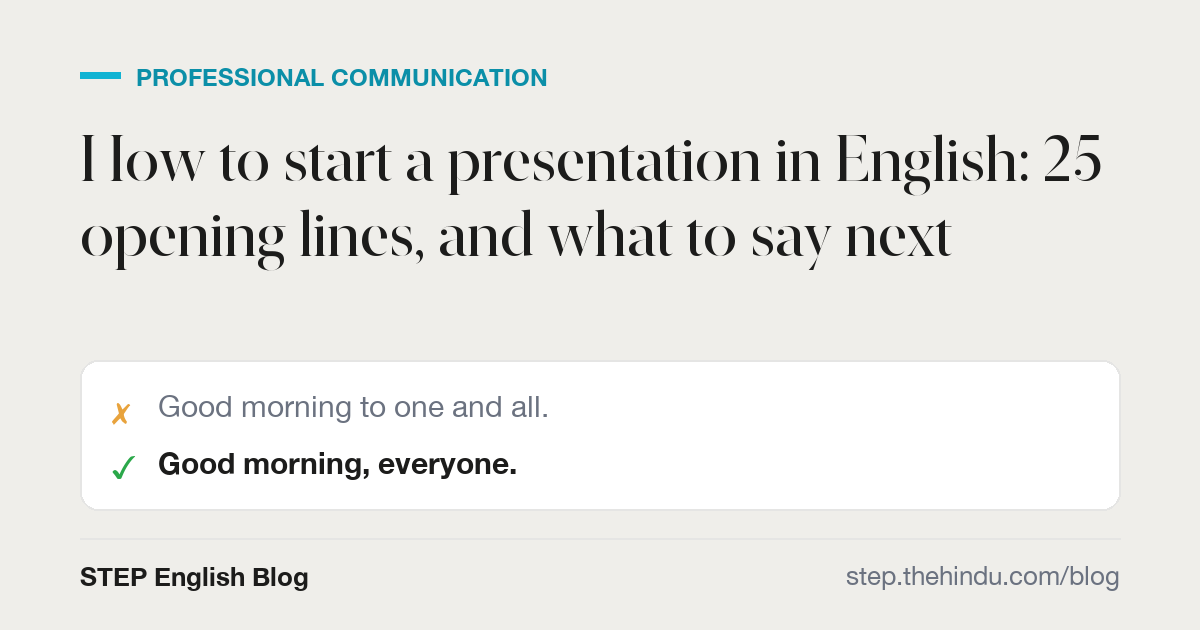
The first minute of a presentation is when nerves hit hardest. Use this four-part opening, 25 ready-to-use lines and practical meeting phrases to sound calm and clear.
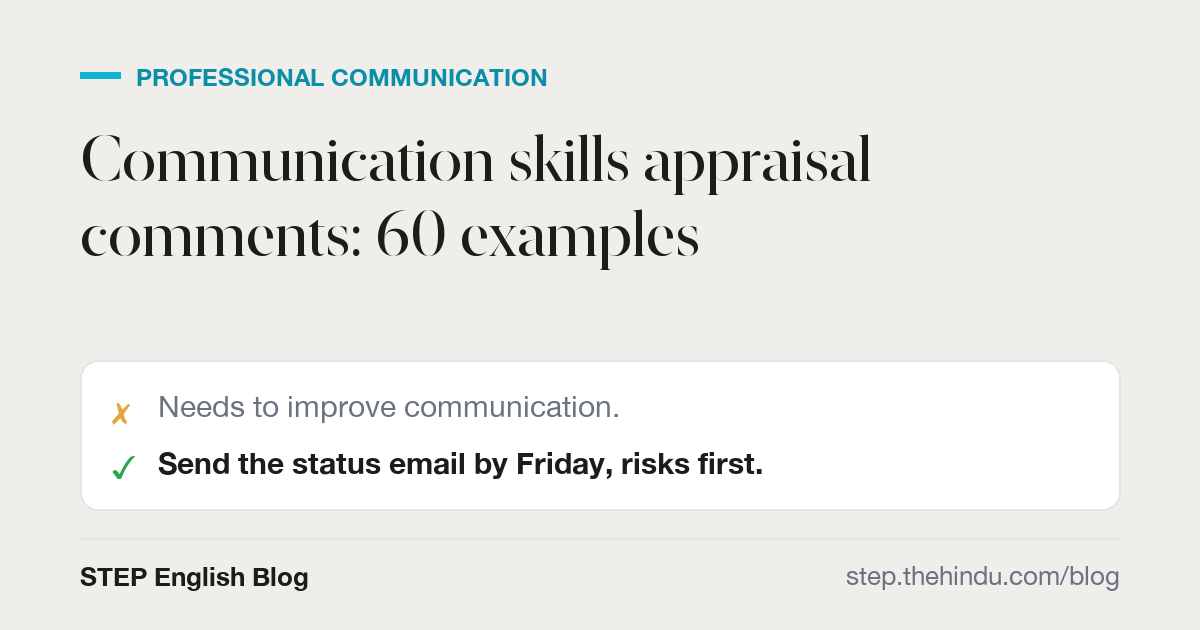
Sixty specific, fair communication skills appraisal comments for managers and employees, focused on clarity and next steps, never on accent.
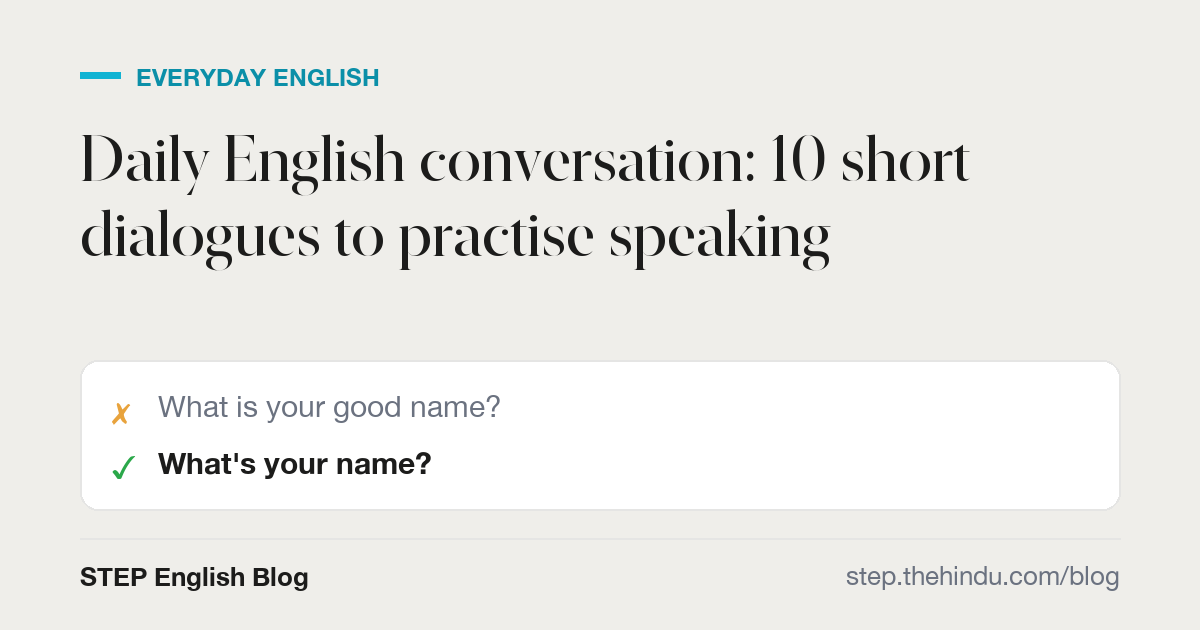
Use ten short dialogues to practise the English you need with neighbours, friends, shop staff and customer care. Each dialogue gives you a turn to speak.
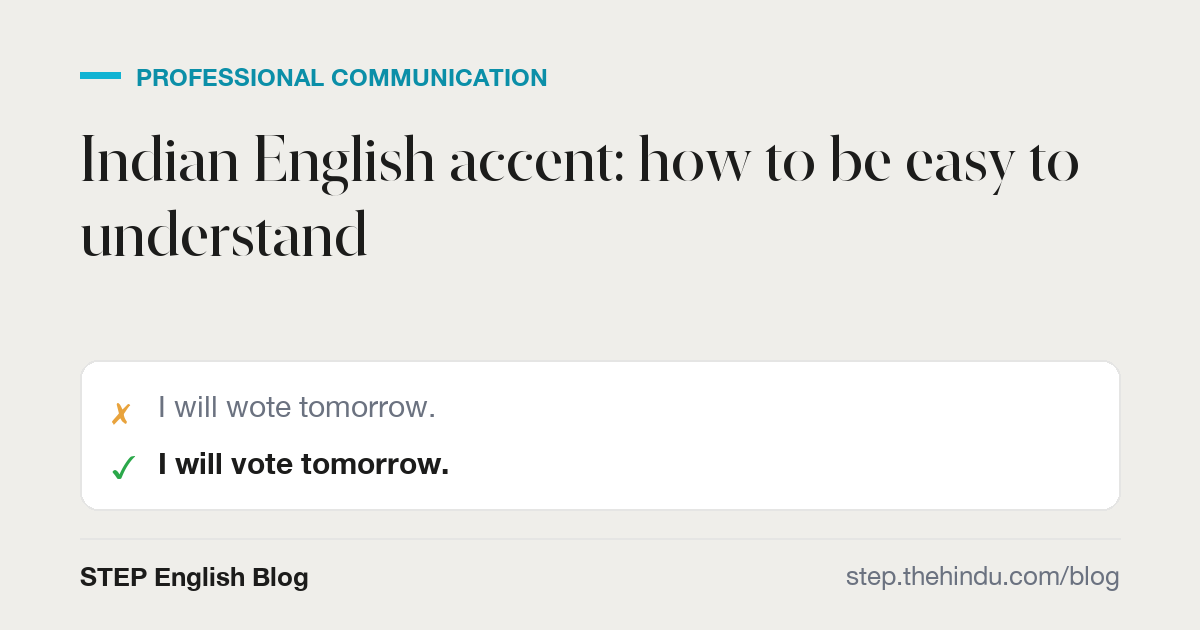
Keep your Indian English accent and make your speech easier to follow. Try six focused drills, 20 words to practise and simple ways to check details on calls.
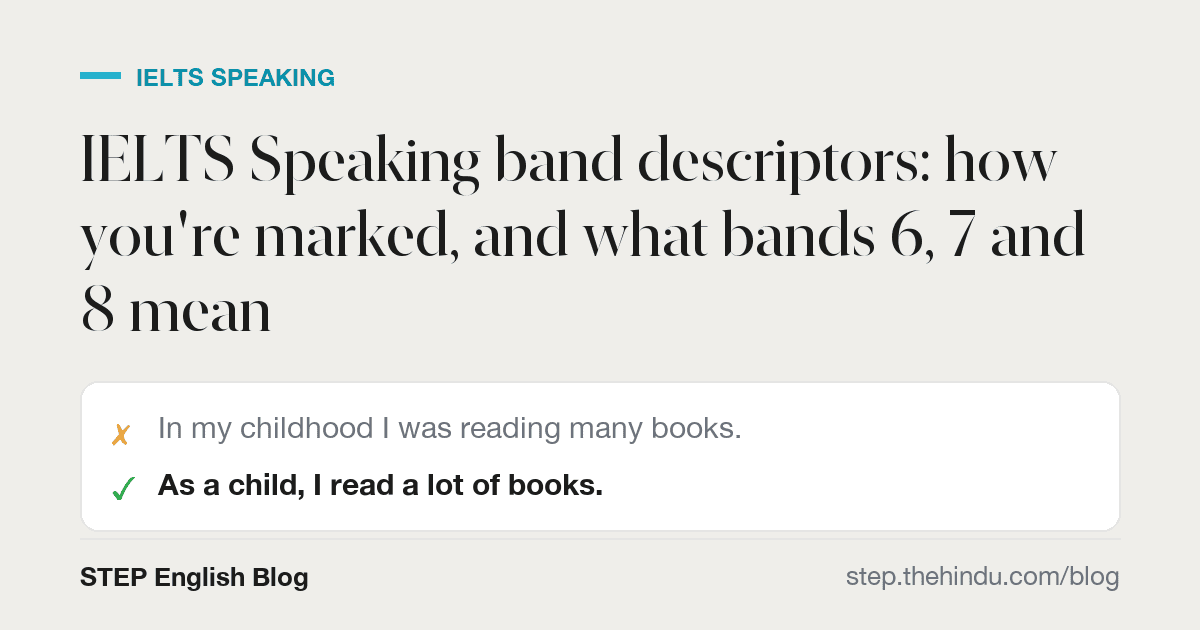
Your IELTS Speaking score comes from four equally weighted criteria. Here’s what bands 6, 7 and 8 mean in plain English, how your score is worked out, why you don’t need a British or American accent, and how to move up a band.
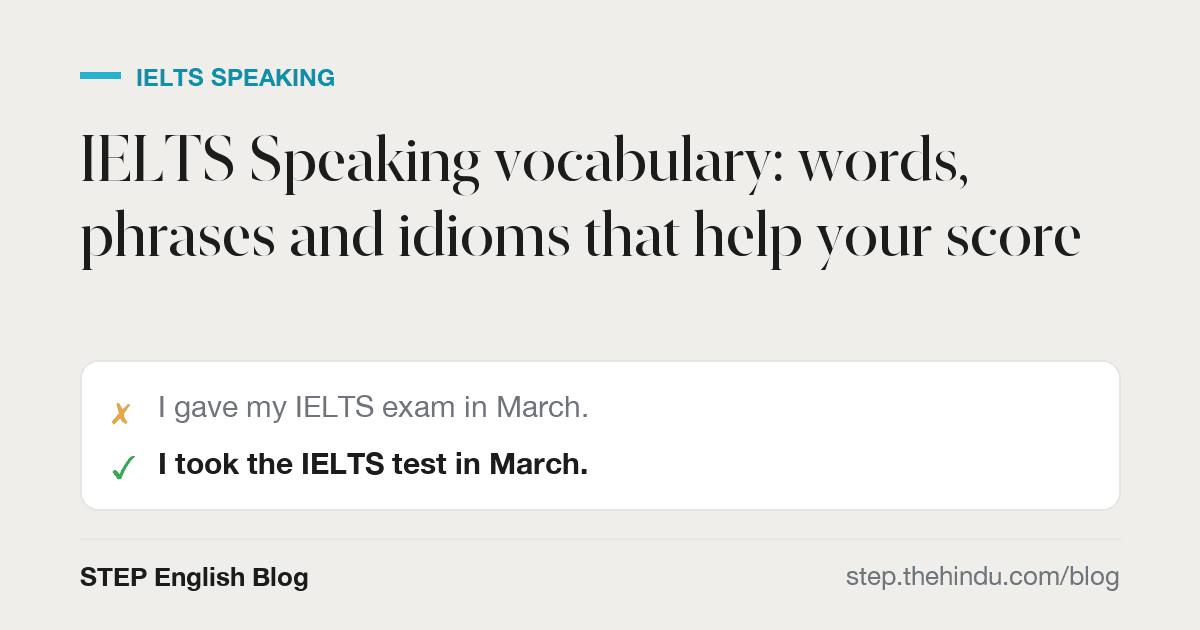
Examiners don’t reward rare words for their own sake. Here’s what they do look for in IELTS Speaking vocabulary, which idioms to use, the word combinations Indian candidates get wrong, and how to paraphrase when a word won’t come.
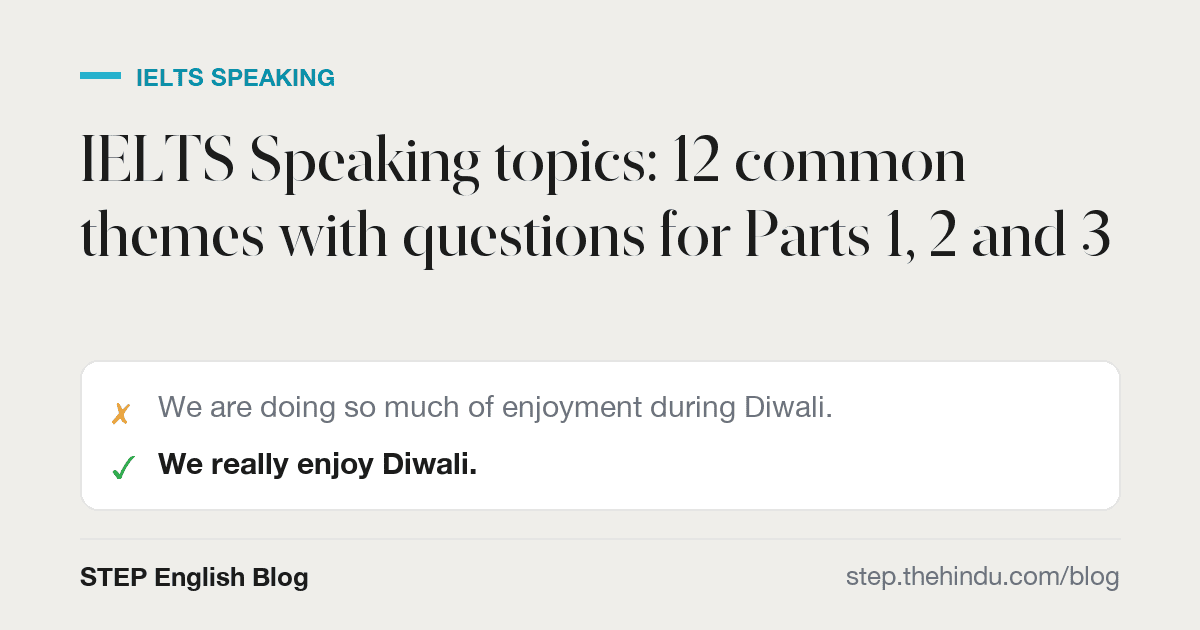
There’s no official list of IELTS Speaking topics, but the same themes come up again and again. Here are 12 of them, each with Part 1 questions, a Part 2 cue card and Part 3 questions, plus a sample answer and a simple way to practise.
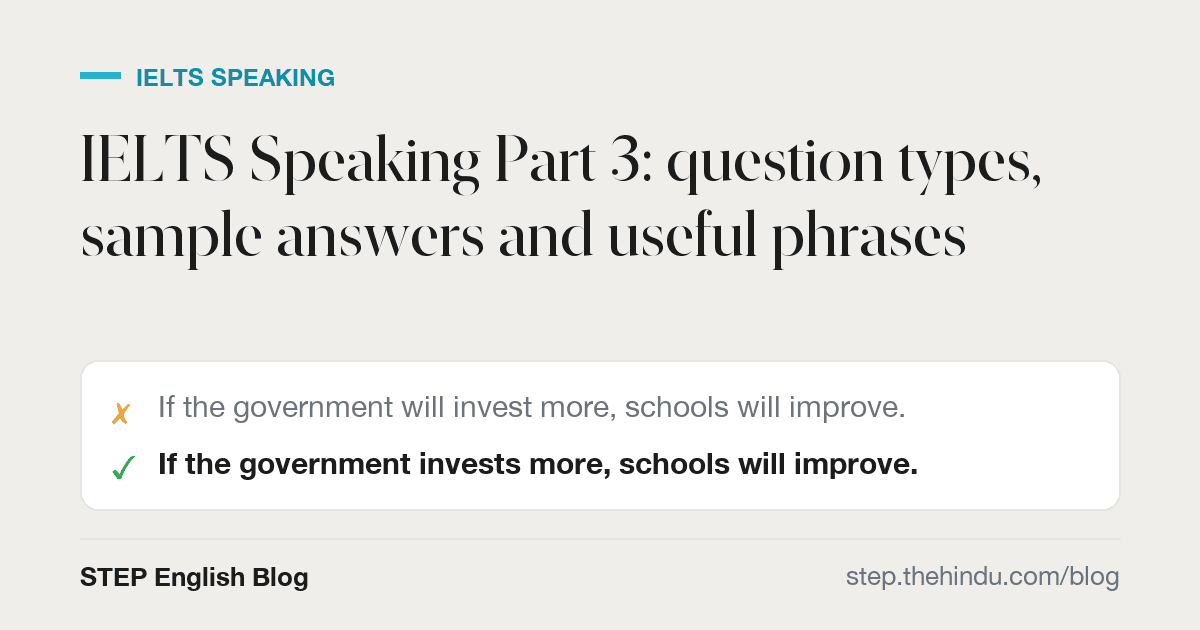
The question types you’ll hear in IELTS Speaking Part 3, a simple way to build each answer, three sample answers and useful phrases.
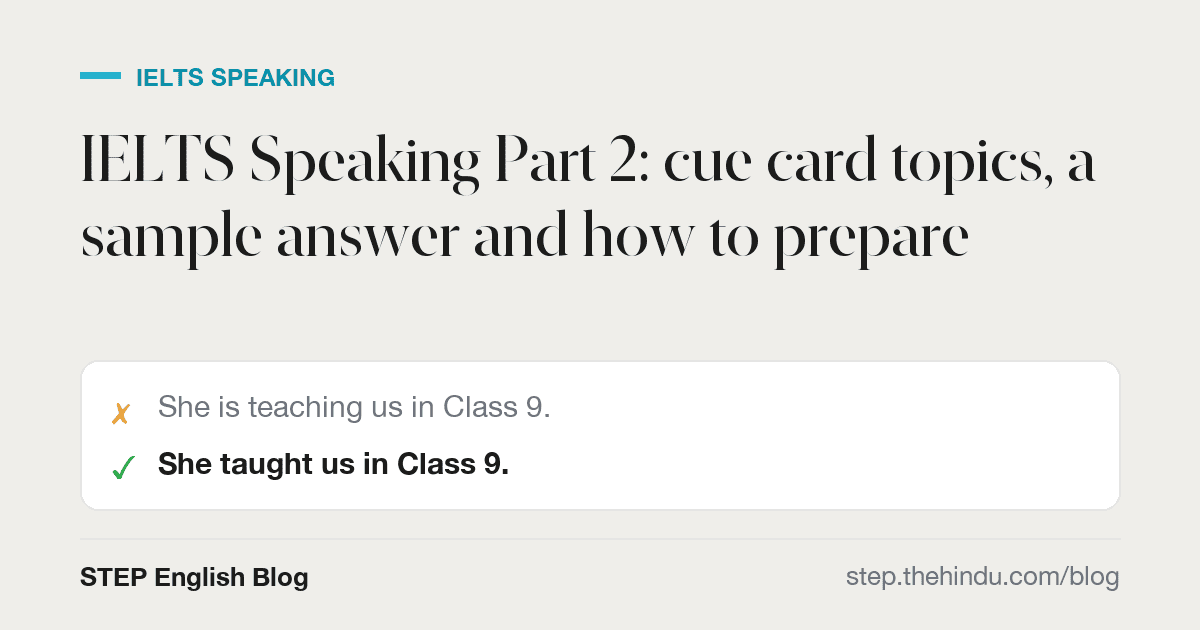
How IELTS Speaking Part 2 works, how to plan in your one minute of preparation, and a full two-minute sample answer to a cue card.
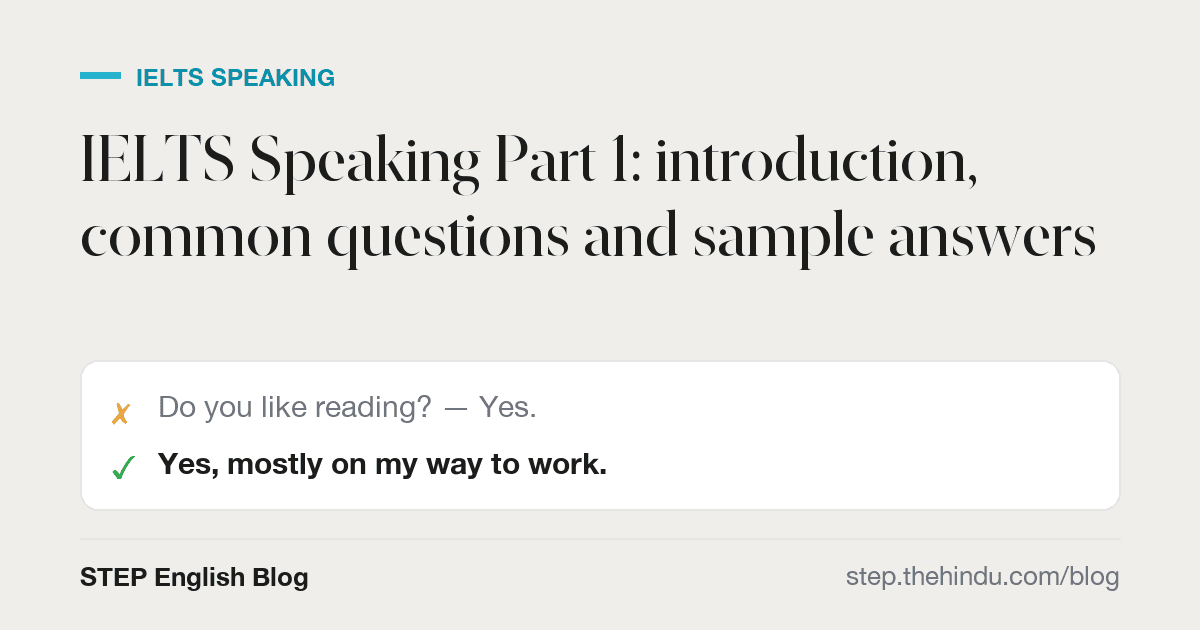
Part 1 is the first 4 to 5 minutes of the IELTS Speaking test. You don’t give a prepared speech about yourself: you answer short questions about familiar topics in two or three natural sentences.